Bhai Dooj 2026
Bhai Dooj 2026 tilak time: the muhurat in your city
Bhai Dooj 2026 is on Wednesday 11 November. The tilak is traditionally done in Aparahna, the afternoon part of the day, which in New Delhi runs from 1:09 PM to 3:19 PM. One detail most calendars skip: Wednesday’s Rahu Kaal ends at 1:26 PM in New Delhi, so the first 17 minutes of that window fall inside it. Start the tilak after Rahu Kaal ends and you are clear of both concerns. The table below gives the window for 30 cities.
Dwitiya tithi, the day Bhai Dooj belongs to, runs from 2:00 PM on 10 November to 3:53 PM on 11 November, so it covers the whole tilak window in every city in the table. The same day is Yama Dwitiya, Bhau Beej in Maharashtra and Chitragupta Puja for many Kayastha families.
What is the best time for Bhai Dooj tilak in 2026?
Panchangs give Bhai Dooj an afternoon muhurat called Aparahna. The daytime, sunrise to sunset, is split into five equal parts, and Aparahna is the fourth. The day is named for Yamuna feeding her brother Yama and putting a tilak on his forehead, the story sisters retell when they do the same.

Because it is a share of the daytime, the window moves with your city’s sunrise and sunset. It starts at 12:27 PM in Kolkata and at 1:37 PM in Rajkot.
Rahu Kaal on a Wednesday is the fifth of eight parts of the day. It always ends a little after Aparahna starts, about 16 minutes in, everywhere. So the practical answer is the “Rahu Kaal ends” column below: begin the tilak after that time, and finish before the window ends.
| City | Tilak window (Aparahna) | Rahu Kaal ends | Morning Labh and Amrit |
|---|---|---|---|
| New Delhi | 1:09–3:19 PM | 1:26 PM | 6:40–9:22 AM |
| Mumbai | 1:30–3:45 PM | 1:47 PM | 6:43–9:32 AM |
| Kolkata | 12:27–2:40 PM | 12:43 PM | 5:46–8:33 AM |
| Bengaluru | 1:12–3:31 PM | 1:30 PM | 6:16–9:10 AM |
| Patna | 12:39–2:50 PM | 12:55 PM | 6:03–8:48 AM |
| Lucknow | 12:55–3:06 PM | 1:12 PM | 6:22–9:06 AM |
| Jaipur | 1:16–3:27 PM | 1:32 PM | 6:43–9:27 AM |
| Ahmedabad | 1:30–3:43 PM | 1:46 PM | 6:50–9:36 AM |
See the other 22 cities
| City | Tilak window (Aparahna) | Rahu Kaal ends | Morning Labh and Amrit |
|---|---|---|---|
| Surat | 1:29–3:44 PM | 1:46 PM | 6:46–9:34 AM |
| Rajkot | 1:37–3:51 PM | 1:54 PM | 6:56–9:43 AM |
| Vadodara | 1:27–3:41 PM | 1:44 PM | 6:46–9:33 AM |
| Jodhpur | 1:27–3:38 PM | 1:43 PM | 6:53–9:37 AM |
| Hyderabad | 1:08–3:24 PM | 1:25 PM | 6:18–9:09 AM |
| Chennai | 1:02–3:20 PM | 1:19 PM | 6:05–8:59 AM |
| Pune | 1:26–3:42 PM | 1:43 PM | 6:38–9:28 AM |
| Kanpur | 12:58–3:09 PM | 1:14 PM | 6:24–9:08 AM |
| Nagpur | 1:04–3:19 PM | 1:21 PM | 6:21–9:09 AM |
| Indore | 1:17–3:30 PM | 1:33 PM | 6:36–9:23 AM |
| Bhopal | 1:10–3:23 PM | 1:27 PM | 6:31–9:17 AM |
| Varanasi | 12:47–2:59 PM | 1:04 PM | 6:12–8:56 AM |
| Chandigarh | 1:10–3:19 PM | 1:26 PM | 6:45–9:26 AM |
| Jalandhar | 1:15–3:23 PM | 1:31 PM | 6:51–9:31 AM |
| Katihar | 12:29–2:41 PM | 12:45 PM | 5:54–8:38 AM |
| Ludhiana | 1:14–3:22 PM | 1:30 PM | 6:49–9:30 AM |
| Amritsar | 1:18–3:26 PM | 1:34 PM | 6:54–9:34 AM |
| Agra | 1:07–3:17 PM | 1:23 PM | 6:34–9:18 AM |
| Ranchi | 12:39–2:52 PM | 12:55 PM | 5:59–8:46 AM |
| Udaipur | 1:25–3:37 PM | 1:41 PM | 6:48–9:33 AM |
| Bhavnagar | 1:32–3:46 PM | 1:49 PM | 6:50–9:37 AM |
| Coimbatore | 1:15–3:35 PM | 1:33 PM | 6:16–9:11 AM |
What is the Bhai Dooj story, and how is the tilak done?
The story is that Yamuna kept inviting her brother Yama, who was always too busy to come. On Kartik Shukla Dwitiya he finally arrived. Yamuna welcomed him, put a tilak on his forehead and fed him. Pleased, Yama granted that any brother who visits his sister on this day, takes her tilak and eats from her hand, need not fear an untimely death. That is why the day is also called Yama Dwitiya.
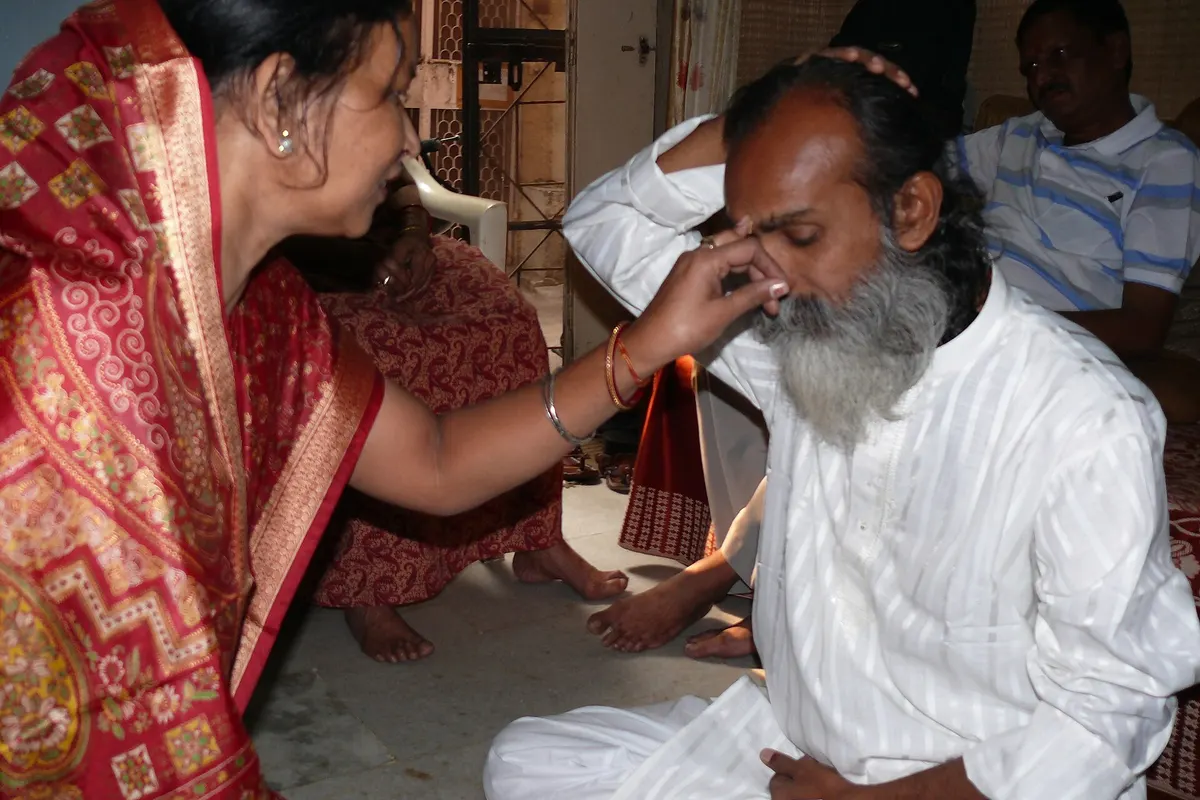
The tilak thali usually holds roli, akshat, a ghee diya, sweets, and in some regions a dry coconut (gola). The sister seats her brother facing east or north, puts a tilak of roli and akshat on his forehead, does his aarti and feeds him a sweet. The brother gives her a gift and, where he can, eats at her home. In Bihar and eastern UP, sisters also do the Godhan ritual that morning before the tilak.
Can I do the tilak in the morning instead?
Yes, and many families do, because the brother has to leave for work or a train. If your family goes by the choghadiya rather than Aparahna, the morning is the better choice: Wednesday’s day opens with Labh and then Amrit, two of the good choghadiya, back to back from sunrise (6:40 to 9:22 AM in New Delhi). The last column of the table has that window for each city.

The afternoon is weaker on the choghadiya clock. On a Wednesday the hours of Aparahna fall in Rog, Udveg and then Chal, none of the three good ones. That is not a reason to avoid the afternoon if your family keeps Aparahna; it is a reason to choose one method and follow it, rather than mixing both.
What if my brother lives in another city?
Each of you follows your own clock. A sister in Patna and a brother in Pune who do the tilak over a video call have different windows: 12:39 to 2:50 PM in Patna and 1:26 to 3:42 PM in Pune. Pick a time inside both, or let the person putting the tilak go by their own city.
The time on our Rahu Kaal page for your city tells you when today’s Rahu Kaal ends on any day, if Bhai Dooj in your family falls on a different date.
Why do some calendars show a different Bhai Dooj date?
When Dwitiya tithi starts in the afternoon of one day and ends in the afternoon of the next, panchangs pick the day whose Aparahna has Dwitiya in it. In 2026 that is 11 November without any doubt, because Dwitiya covers the whole of that afternoon. Maharashtra’s Bhau Beej falls on the same day this year. Nepal’s Bhai Tika follows the Nepali calendar, so check that one separately.
Diwali week runs Dhanteras on 6 November, Lakshmi Puja on 8 November and Govardhan Puja on 10 November; our Dhanteras and Diwali 2026 choghadiya guide has the city times for the first two.
Times worked out on 20 October 2026 for each city’s coordinates. Dates are for New Delhi and were checked against a reference panchang; see how we calculate.
Today’s timings for this
This post describes what the panchang tradition says about a window; it is not personal advice. Times on the linked pages are computed for the city you choose.